In Conversation: Kane Parsons’ Backrooms
The following conversation is transcribed from the Above The Line episode discussing Kane Parsons’ Backrooms. The conversation has been edited for readability. Spoilers ahead.
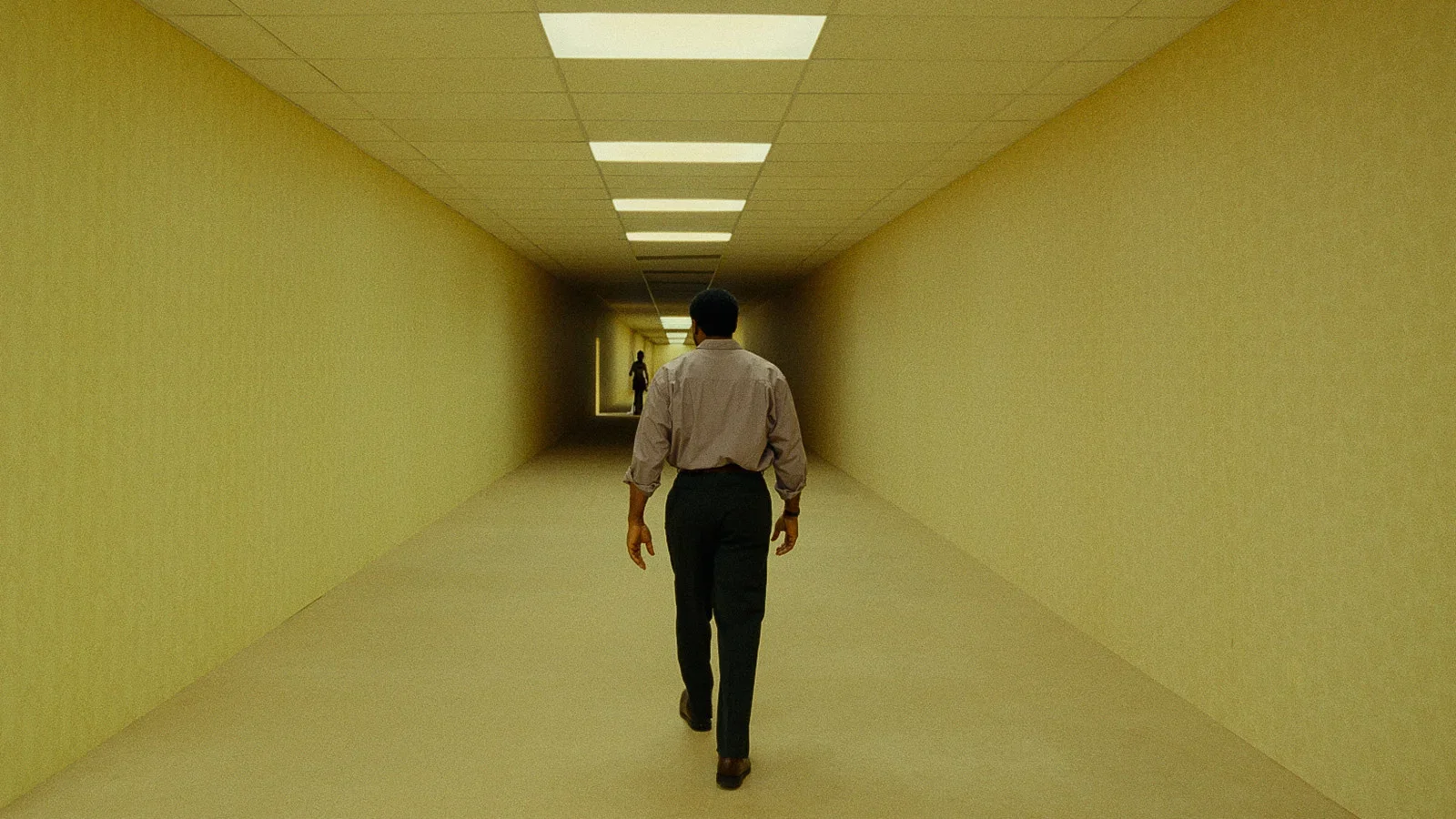
Ian: I did not really care for this movie, albeit I was intrigued for the first hour. One thing [that] I think would be an interesting place to start [with], is a text from you after you got out of the film, saying that you weren't really scared by the film. I think this is interesting insofar as this movie was being pitched as a horror movie, and even now, as the movie has had its very successful opening weekend and we're going into its second week in theaters, Kane Parsons is walking back the horror genre description of this film and trying to label it more as a science fiction movie.
I found it to be pretty spooky for the first hour, and a couple of the jumps did get me. But [you texted] me after getting out of it, saying, "I didn't really find it all that scary," which I think is interesting to talk about, especially in the broader context of it being an A24 movie and them being really known for selling movies as one thing and then they turn out to be another.
Famously, they had Materialists, which they marketed as a romantic comedy, and all of Ari Aster's movies have been bait-and-switches. I'm curious as to why you felt that way coming out of the movie and if it really was one of the reasons you didn't love this movie, or if there's other things.
McKenzie: I do want to say, for the naysayers who [may say], "well, it's not supposed to be scary, it's supposed to be tense," I didn't feel that either. I didn't feel tense, I didn't feel anxious or, you know, [any of] those feelings that a liminal space image is supposed to create in you. I could hear and see the audience around me feeling all those things. I was surprised that I felt like I was not at the party. I was watching the party happen thinking, "they're having a party over there, and I'm not a part of it," you know? That's how I felt.
Ian: And you're a self-admitted big baby.
McKenzie: I am a big baby. I really, really avoid horror movies. But Backrooms sounded interesting and I wanted to see it. It was one of those few horror movies where I felt like I need to be a part of this moment.
I definitely am someone who gets the fear of liminal spaces. Like you said, because I was — and still am, though I am, thankfully, medicated for it now — a very anxious person. The medication has very much helped [in adulthood], but as a child I was very, very anxious. A lot of my anxiety as a kid, and a lot of the things I would get scared of or make up in my own head, felt connected to that. To me, liminal spaces were these canvases to project the things that might scare you onto them.
That's why I think that centerpiece of the film is the best part for me. The found footage element of it is closest to what Kane Parsons did on YouTube. It is very visceral, it's so cool. You're running through the backrooms and getting all these incredible moments. Honestly, the dude being ripped down the chute, I thought, was so scary. And then my favorite shot in the movie [was] with the sideways door [when] he's being pulled by his long intestines into it. I loved that.
Nothing else in the movie elevated to that position because I do not think, ultimately, Kane Parsons' vision or concept was able to stretch into a feature-length film. Those ten minutes are what the movie should have been: a short film. And when he tries to make it a movie, when he tries to make it a narrative, with a backstory and characters, it really falls flat on its face.
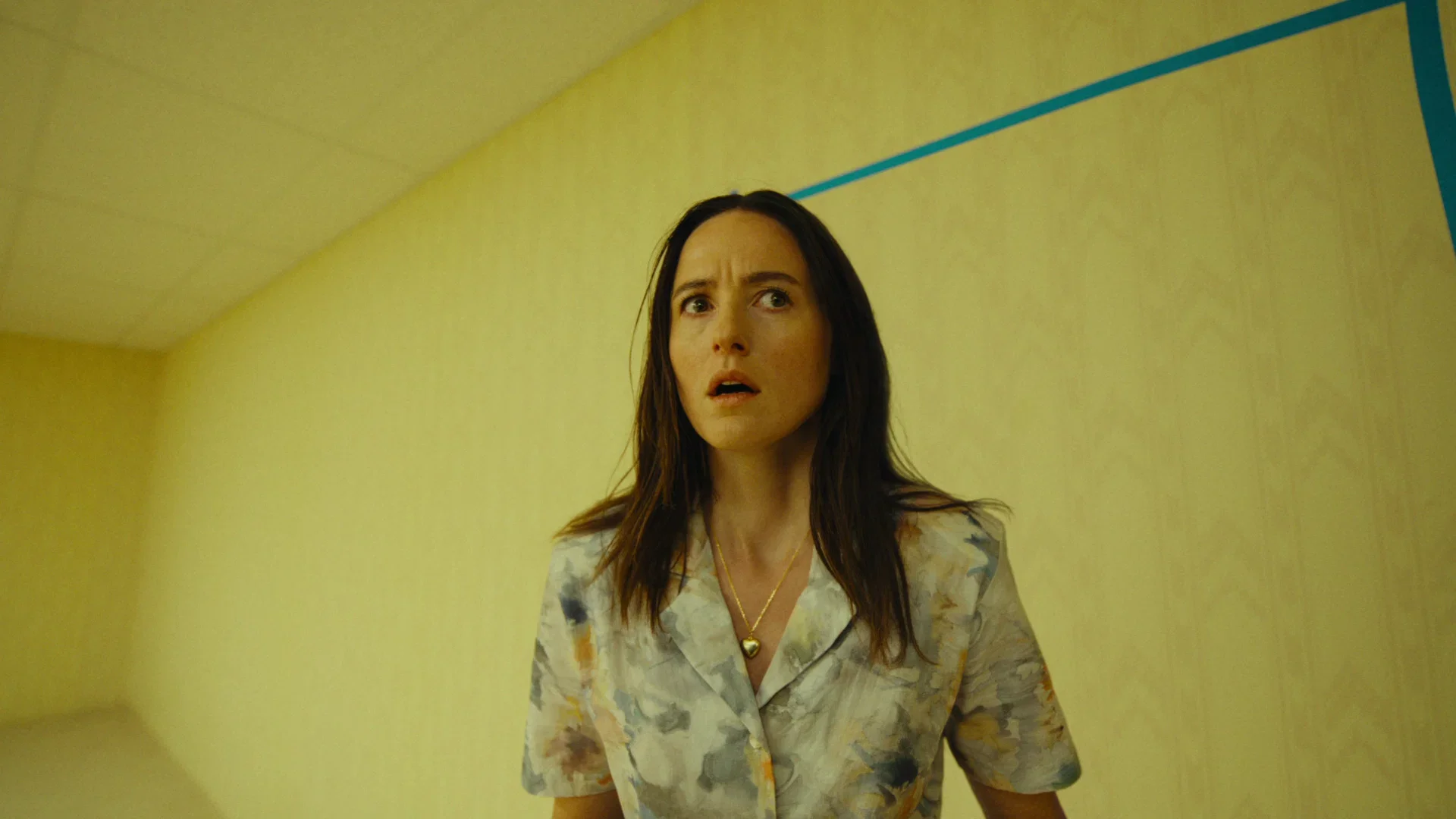
Ian: I will say that [while] I am a very anxious person, I do not find the idea or concept of liminal spaces to be all that scary or anxiety-inducing. Albeit, I found a lot of moments in Backrooms to be quite tense. Mostly what I got out of it was, "this is a really interesting vibe and a really cool aesthetic." I really like the odd, confounding, and disorienting nature of the design of this place, but it never really scared me.
I agree with you that the centerpiece is the best part of the movie, McKenzie. It was so interesting because there's a mix of practical and digital effects. The bulk of what Kane Parsons did on YouTube was a self-taught exploration of CGI and digital effects. There are massive swaths of this movie that are completely rendered in CGI software, which is really cool. They did build a lot of this, but they also rendered a lot of it digitally.
Getting deeper into it, this movie is kind of self-cannibalizing. In a way, I have seen that be a benefit to people trying to project larger thematic elements onto it. I've seen lots of people talking about how this is a movie about the pervasiveness of AI, about addiction, about mental illness, about trauma, whether familial or otherwise. To me, that just speaks to how this movie doesn't really have a handle on what it wants to be about. It's raising a lot of interesting questions, but it is so nonspecific and mostly just about the scariness or eeriness of liminal spaces to the point of not really being about anything.
McKenzie: I can see the AI thing, but I don't get that out of it. I didn't get any themes [in] this movie, to me, it's ultimately toothless.
The characters are very underdrawn. Chiwetel Ejiofor and Renate Reinsve are doing great jobs because they are phenomenal actors, [but] they are given a script that is paper-thin and gives them nothing. For Ejiofor, I thought the leap this guy made from “scared-but-curious” to “madman” was a little quick. With Reinsve, there was this very heavy-handed backstory about a mentally ill mother who I presume was agoraphobic or schizophrenic in some capacity, probably a combination of the two. One would assume when you're being shown something in a movie, that it will matter to the movie. But at the end I was like, was it just to say she has a lot going on? What was the purpose? I'm supposed to [care] about Ejiofor and Reinsve, especially in that dinner scene, and these characters don't make any sense to me. At that point, I was frustrated. I think it overexplains itself. I really do. I hate the Async stuff. I don't like cutting back to the scientists. I don't like the ending.
I completely disagree with people saying it's vague or ambiguous. I think it gets too explicit at the end with the Async stuff. If anything, it removes a lot of the beauty of a Backrooms story. The idea of these liminal spaces is that they exist almost outside our reality, there is a fear and a beauty in them.
I saw an interview where Kane Parsons said, "I really wanted to avoid lore bloat because I think horror movies explain themselves too much,” and I thought, "then what was the ending of this movie?" People saying it's really oblique, vague, and ambiguous — I simply don't feel that way. The most anxiety-inducing things were when you're in the backrooms and you have no idea what's going on. You have no idea what the next room is going to be. People are getting killed and you don't even see it. That is the exhilarating stuff because you don't know what's happening. The opening scene, too, is really cool.
“I completely disagree with people saying it’s vague or ambiguous. I think it gets too explicit at the end with the Async stuff. If anything, it removes a lot of the beauty of a Backrooms story. The idea of these liminal spaces is that they exist almost outside our reality, there is a fear and a beauty in them.”
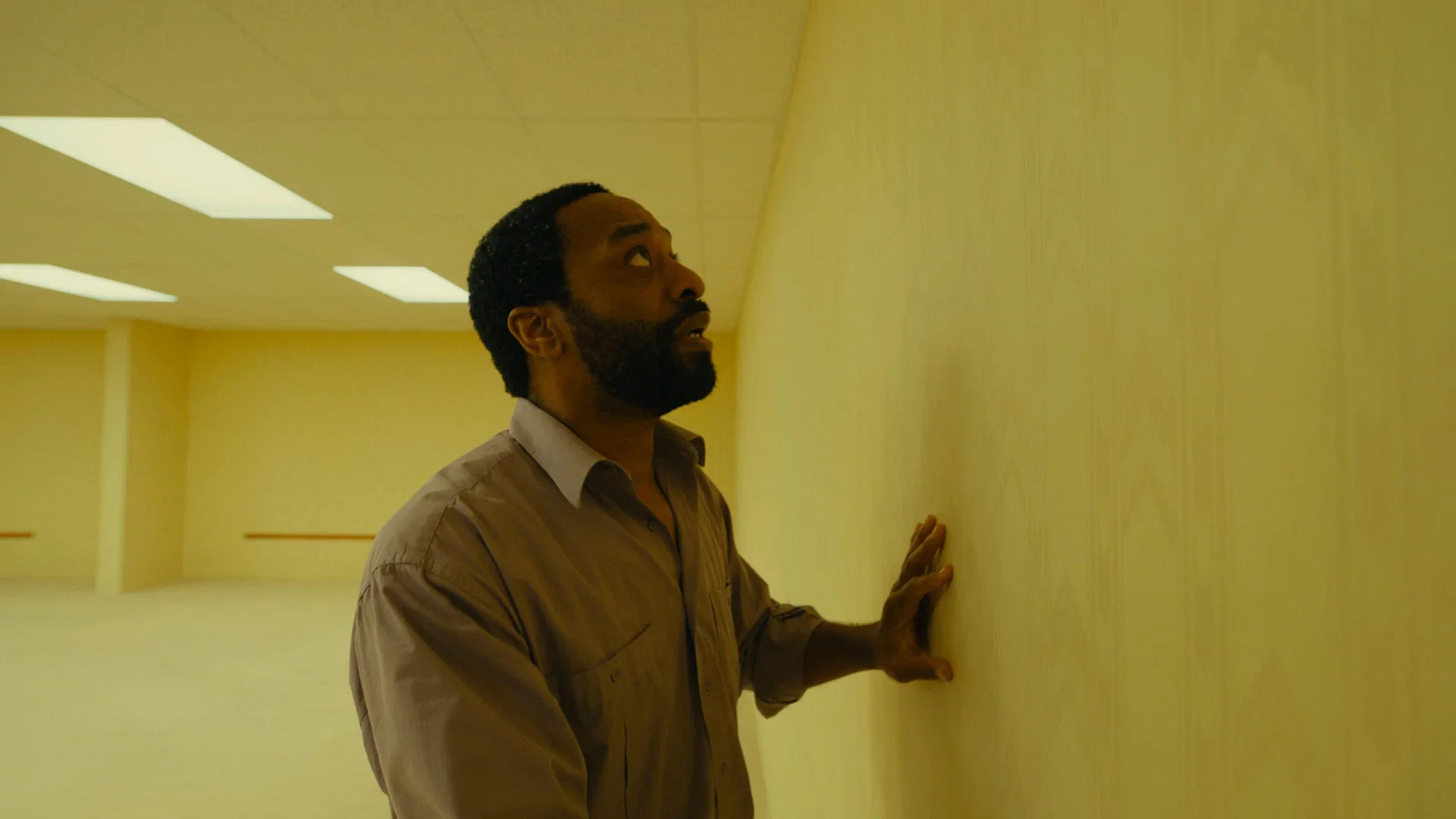
Ian: Yeah, that prologue is so tense and so interesting. And if you never learn that there's a company actively exploring this place and that it's their job to do so, it becomes so much more interesting. This is the big problem with mystery-box storytelling. There is no satisfying answer you could possibly give me that is more interesting than the lack of an answer. People who are saying this is ambiguous, vague, or oblique—I think they're mistaking the lack of concrete answers for subtlety, which it's not.
I understand where people are coming from with a lot of the things they're projecting onto this movie. I understand where people are getting the addiction metaphor from, and I also understand where people are getting the mental illness metaphor from, because they're very obvious metaphors. The Chiwetel Ejiofor character is a chronically depressed alcoholic, and then, as you referenced McKenzie, there's this very deep-seated trauma involving an agoraphobic — or at least hinted-at schizophrenic — mother in Renate Reinsve's character's backstory. She's traumatized. She's dealing with mental illness. It's not a very difficult leap to make that the Backrooms could be a metaphor for that.
Okay, it's an endless prison of your own mind, whether it be addiction or mental illness. But that's a pretty rudimentary, surface-level observation to make about those kinds of struggles. I don't think it's as deep as it believes it is. That's a symptom of it being made by a twenty-year-old. Now, I will admit, I am twenty-eight years old, that's not that much older than Kane Parsons, but it is almost a decade older. It's a little more time being alive, making mistakes, and going through experiences that shape you. But I want to be very clear that I'm not projecting a forty-five-year-old's opinion of, "This kid doesn't understand what it's like." I'm seeing a lot of people throw that critique at Kane Parsons, "this twenty-year-old is telling me what midlife malaise is like? Give me a break." I think there's some validity to that critique, [but] I want to say I'm not really trying to do that.
McKenzie: People are using his age to diminish him, and I worry that maybe that's what it sounded like I was doing. I don't think his age means he's a bad director. Again, this movie looks great, and I think he has some really brilliant moments. In terms of storytelling, he has a lot of growing to do.
Ian: My biggest issues with this [film is] I really found it to demonize people with mental illness. I found it to be a little antagonistic toward the very concept of therapy, I thought it misrepresented how therapy actually works. One brief, minor quibble of mine is that role-playing scene that comes back at the end. That's just not how that technique works in therapy. You don't role-play as yourself so you [can] call your wife a bitch. You don't get to just cathartically say your most rageful things while your therapist sits there and takes it. That's really strange to me. So that displayed a lack of understanding of how that works.
And then, when we get these flashbacks to Renate Reinsve's character's upbringing with this agoraphobic, or maybe schizophrenic, mother — especially when she's placed in an institution, I found that to be a horror trope that really annoys me. It's that old "ooh, the mentally ill person is scary" thing, the idea that mental illness itself is something to be feared. It's something I'm personally tired of.
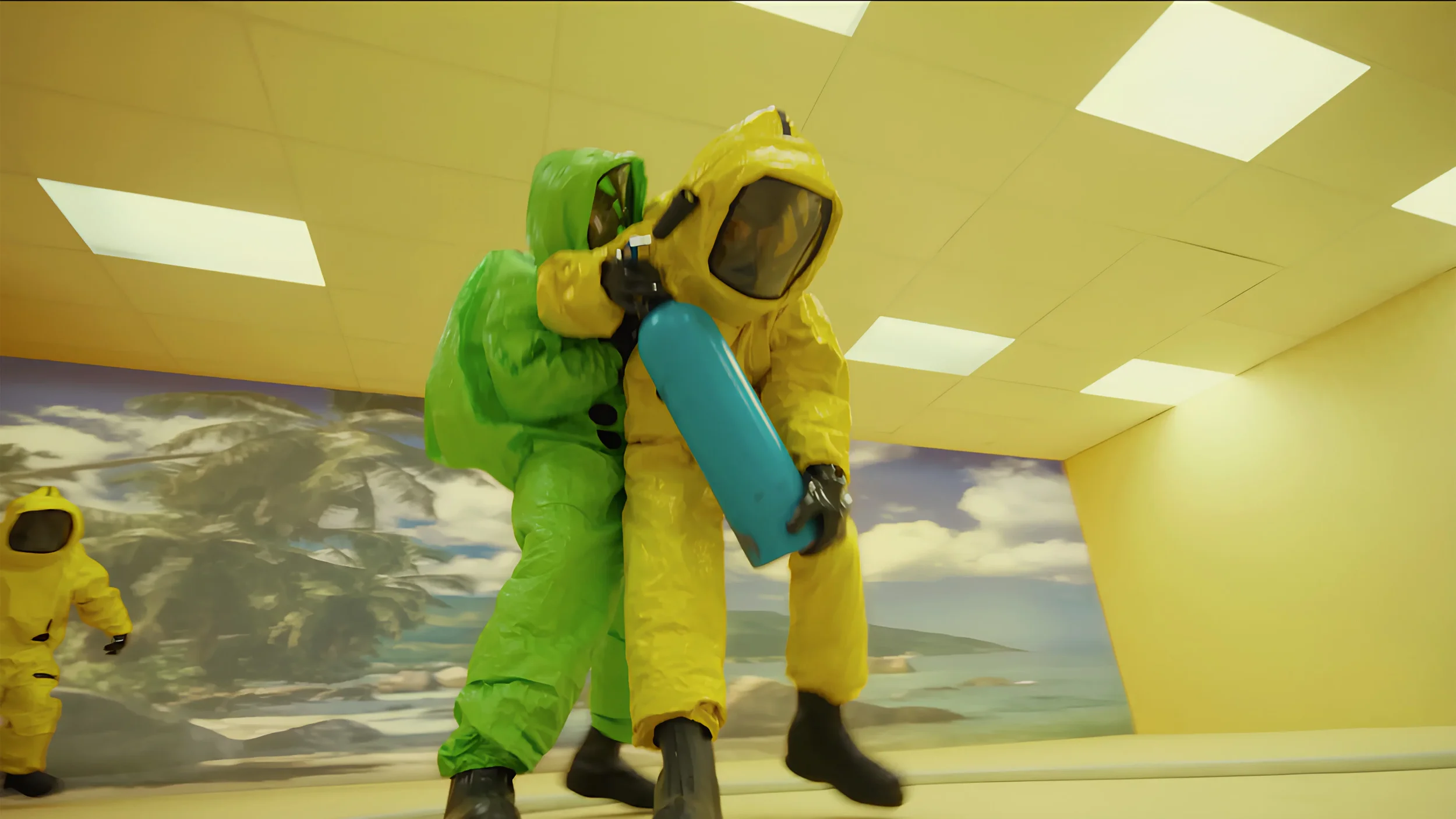
But then, yes, McKenzie, as you've been hinting at, we come to the dinner scene. The movie comes to a screeching halt. For an hour, it's been an interesting vibe, a great mood, and a really cool aesthetic. And then the movie suddenly goes: "okay, stop. Here's what it's all about. Here's what we're doing. Here are the themes. Here's everything. I've got ideas. Here's a lot of them. Here's some lore. Would you like some lore?" And I turned on the movie in that instant.
When he starts pulling the cotton-candy fungus stuff out of people and stabbing them in the neck, it felt like we were trying to do some sort of Black Lodge Twin Peaks thing and it was highly ineffective. It really did ruin all the goodwill that had built up over the first hour for me, to be perfectly honest.
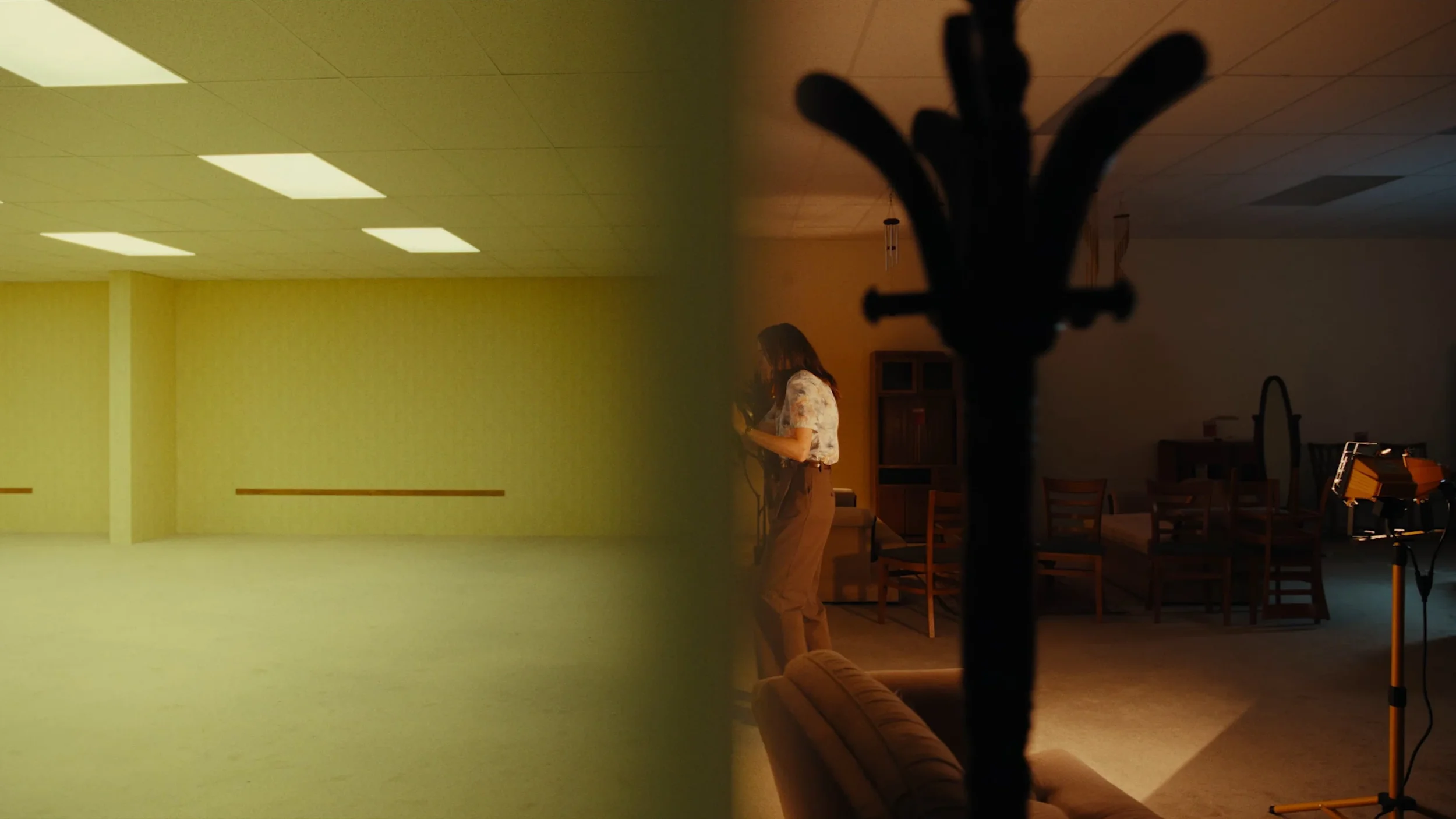
“If you start playing with capitalism, late-stage decay, and how that affects the people living within it, then you’re actually engaging with the spaces themselves. The real-world spaces that inspired the creepypasta in the first place.”
McKenzie: It gave me less Black Lodge vibes and more the Convenience Store where Bob and the Arm meet, Which, [if] you're trying to do Fire Walk with Me, one of the most brilliant pieces of art ever made, that's hard.
But with what you said, in terms of it laying out all of its themes, I do think the concept works better the less you know about it. I wonder if what Kane Parsons brushed up against when he was [creating] the story here was that we are, and have been, in an era where horror films have to be "about something." The elevated horror era that we're moving out of now. This movie would have been better if it wasn't trying to be about something.
Ian: I'm throwing out all these critiques that essentially get chalked up to Kane Parsons and his writer — because we should remember Kane Parsons doesn't get a screenplay credit on this, although I think he does get a story credit. What my critiques boil down to is that there are a lot of ideas being thrown at the dartboard and nothing really hits a bullseye. There's the addiction angle, there's the mental illness angle, there's the whole concept of liminal spaces, which could branch off in a million different directions. There's this evil corporate entity behind everything. There's a lot of ideas, it's too many, it's overstuffed and it's not interested in really engaging with any of them in a meaningful way.
I [was] talking to my wife before going, and [said], "How is this going to be a movie? I'm worried this is going to be a nothingburger because it's 115 minutes long and it's based on YouTube shorts about this pretty simple idea." And my wife, genius that she is, had a really interesting thought. She was like, "Well, maybe it's about the way capitalism eats itself. Maybe it's about these spaces becoming abandoned, the hollowing out of society," and I could immediately see more interesting stuff going on in that idea than what we actually got.
McKenzie: I love that idea. It immediately made me think of the liminal spaces I experienced in real life that I still think about because [they were] so spooky and beautiful. It really is this absence of capitalism. Capitalism has abandoned this place, and that's fascinating. Damn, now I want that movie.
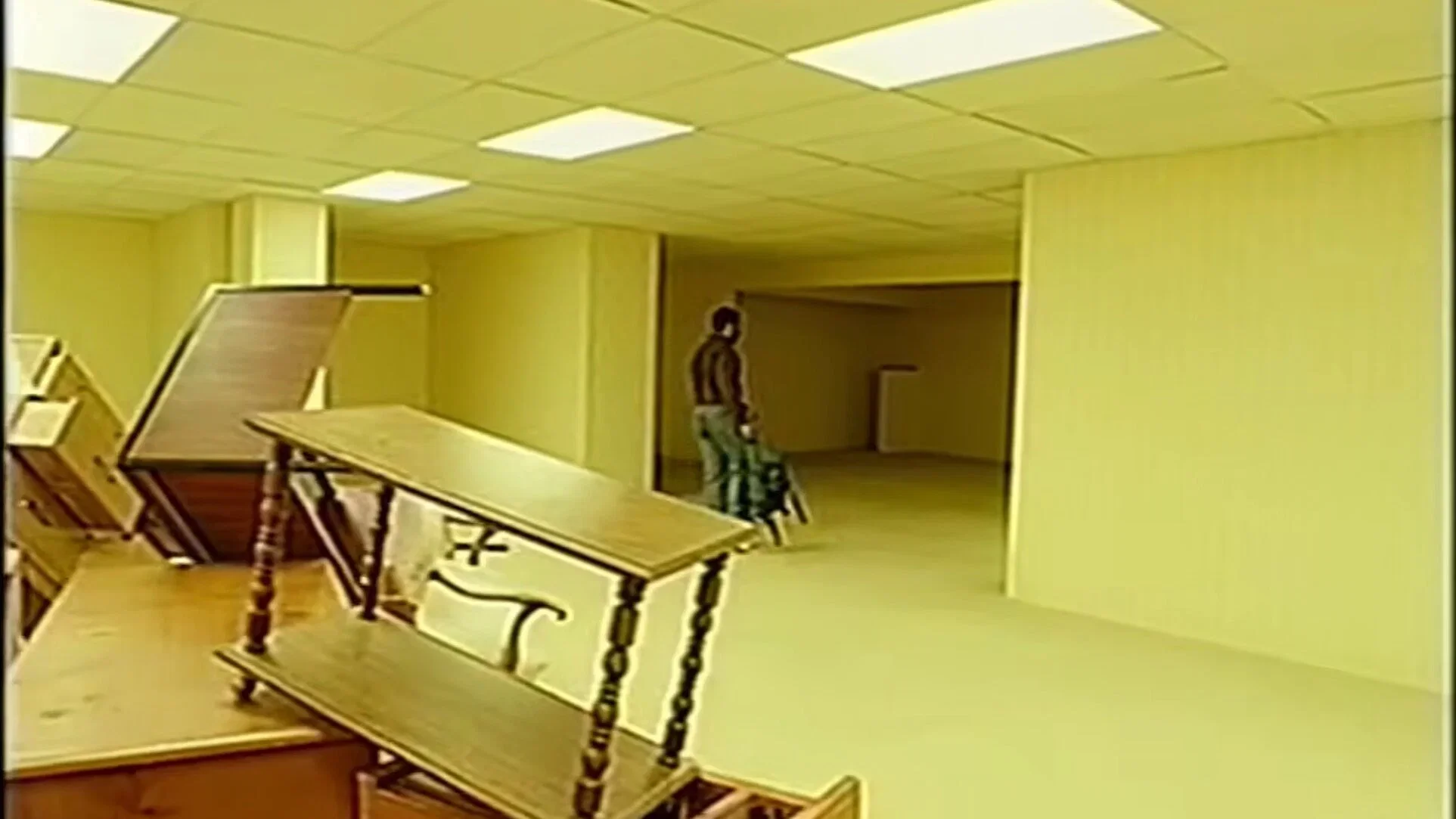
Ian: Not to continue talking about a movie that doesn't exist — but if that were the idea, if that were the concept, then you're actually engaging with the spaces themselves. If you actually explored the idea of capitalism coming into a place, making everything the same, making it this beige-yellow, mundane, banal environment, and then abandoning it... because the original Backrooms photo was from an abandoned office building. If you start playing with capitalism, late-stage decay, and how that affects the people living within it, then you're actually engaging with the spaces themselves. The real-world spaces that inspired the creepypasta in the first place.
McKenzie: We're cresting into the end of our conversation, but can I throw one thing at you? I think the movie would be better without the Renate Reinsve character, I did not see the purpose of her. I really, really think it would be a more interesting movie if it was a one-hander, a Lovecraftian horror story about a man losing his mind in the backrooms, if it was just [about] Ejiofor's character going in there. After the centerpiece, we leave his point of view and move to Renate's point of view. That's part of why we lose how he became Kooky-Pants Man. [Ejiofor’s character] lightly mentions that he keeps coming back over and over and over again and I want to see that. It would have been interesting if the movie stayed very focused on the [his] character.
All the stuff with his wife, all that self-pity, all of that can still be there. But instead of Renate Reinsve — a character who ultimately has no development or deep relationship to this man — confronting him in the “Red Room,” if you will, maybe [instead] it's a copy of a copy of a copy of his wife. A deformed version of the person he perceives as the monster who abandoned him and ruined his life. And yes, then we get into "you're facing your trauma in the backrooms," but at least that would make a little more sense. I wonder if, without her character, we could have stayed locked into Ejiofor's POV and watched this dizzying spiral into madness. That would have been much more interesting. I think she's useless, and I hate saying that because I love her as an actress.
Ian: I was about to say, counterpoint: Renate Reinsve.
McKenzie: I know, the counterpoint is that she's a beautiful woman on my screen.
Ian: Yes. Whom I love, and who honestly was the driving factor in getting me to go see this movie. But yeah, I think you're probably right, McKenzie. Maybe you lose a little bit of external processing with the character, but at the end of the day, I think if you had taken what the movie does with Renate Reinsve and instead focused more on fleshing out the employee character and her situationship, they were an interesting vibe. Her being his employee was a little incongruous and didn't make a lot of sense [so] maybe fleshing that out would have been more interesting than introducing Dr. Mary Klein and everything connected to the Reinsve character.
“We’re entering this new age of internet-based horror, and this movie is going to be integral to that conversation. It’s going to be in a book about this someday, it’s going to be remembered as one of the first major success stories of this type of horror. Even if I didn’t love it, I respect the [hell] out of that.”
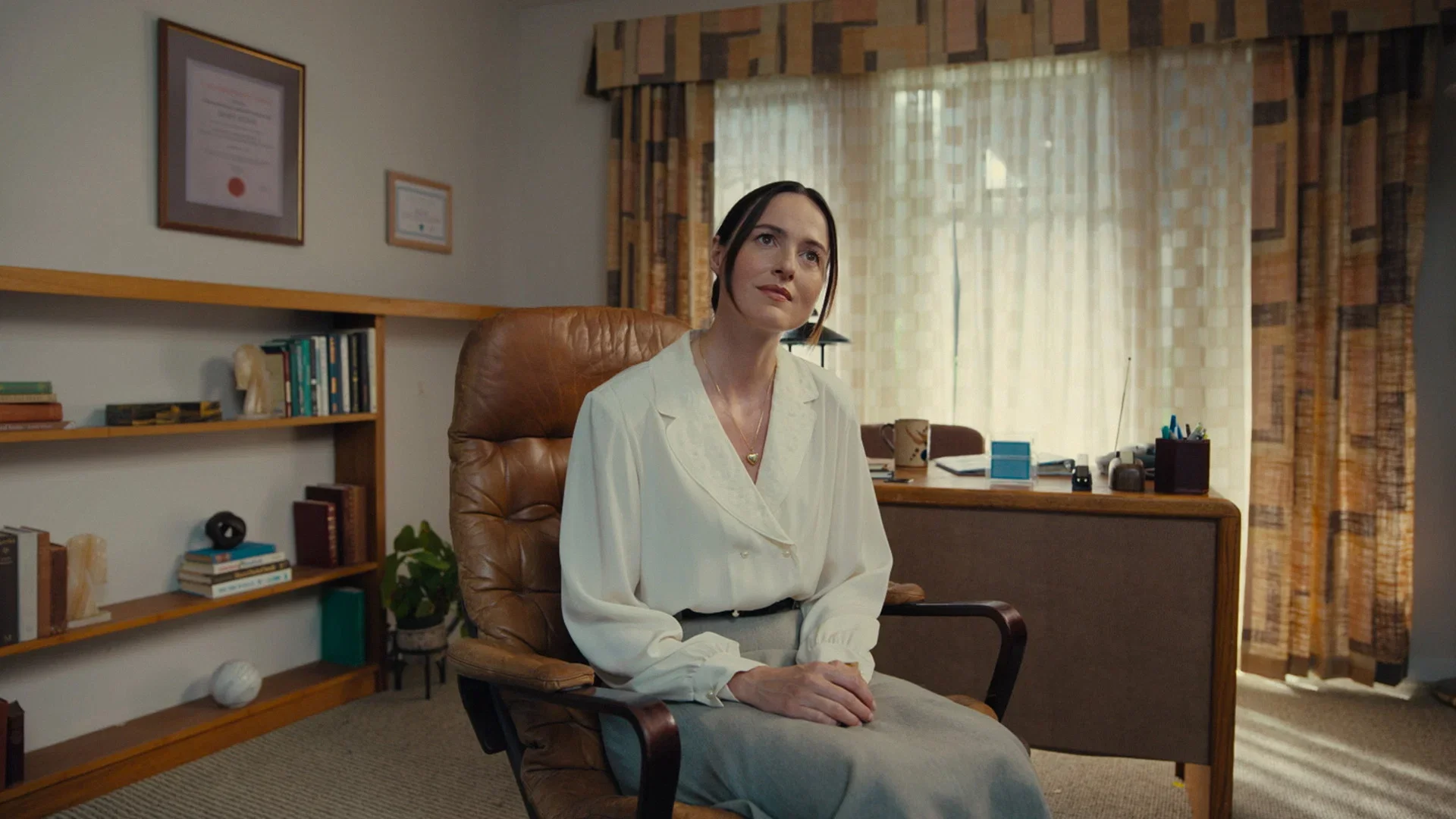
Ian, continued: Although then he wouldn't get his cute little therapy audiobook commercial in there, which I thought was just okay. It is interesting that this kid is so clearly obsessed with the nineties. I don't think the nineties setting was super necessary. This isn't a movie that requires the absence of cell phones. I think it's mostly just a vibe. Now, I like the nineties and I'm nostalgic for the nineties. I barely remember them, I was born in 1997, but there are holdovers from the turn of the century that I'm nostalgic for. I do find it interesting that this guy, who was born in 2005, is so obsessed with that era.
McKenzie: I think liminal spaces are inherently nostalgic. A lot of them are from the eighties and nineties. They're abandoned buildings that haven't been touched in [fourty] years. Which is why I think people our age have that nostalgia for liminal spaces because they're the spaces we occupied as kids that have now been abandoned. And we grew up on the internet where those spaces became creepypastas, 4chan posts, Reddit posts, two-sentence horror stories, and all the rest. It's part of that era of internet horror we've talked about before.
We're watching this subgenre being born right now, which is weirdly exciting to me. Not that elevated horror is ever going to disappear. But it feels like movies such as The Babadook, Get Out, Hereditary, and Midsommar ushered in a certain era of horror. Now [that] we're entering this new age of internet-based horror, and this movie is going to be integral to that conversation. It's going to be in a book about this someday, it's going to be remembered as one of the first major success stories of this type of horror. Even if I didn't love it, I respect the [hell] out of that.
Ian: I am impressed by Kane Parsons and what he was able to accomplish. I wish it had been a little more focused and a little shorter. But I am excited to see what he does next.
McKenzie: I hope he keeps going. I don't want him to go back to YouTube! YouTube is fine, but I hope he keeps making films because I think that would be great.
Ian: We love the cinema, baby.
